How many restrooms does a county fair need?
Fairs are trickier than a construction site because attendance swings by the hour, and OSHA's 1926.51(c) table, written for steady work crews, does not map cleanly onto a midway. Menifee Porta Pros starts from ANSI/PSAI Z4.3, the portable sanitation standard that sets one service visit a week as the baseline for light steady use, then multiplies hard for peak fair hours since actual demand at a gate rush is nothing like a 40 hour workweek. Use our porta potty calculator guide as a starting point, then add units for beer gardens, livestock barns and grandstand seating separately, because each draws its own line. A layout with too few units backs up fast, and a fair only gets one shot at word of mouth. For a fair expecting several thousand daily visitors, we usually blend standard units with a bank of deluxe flushable units near the grandstand and food court, since flush units clear lines faster than standard ones. Every fair site also needs ADA accessible units worked into the count. ADA Standards section 213.2 requires that where single-user portable units are clustered, at least 5 percent be accessible, with a minimum of one no matter how small the cluster. Each accessible unit needs a 60 inch turning circle inside per ADA 304.3.1, and a 32 inch clear door opening under ADA 404.2.3, so we do not just add a compliant sign to a standard unit and call it done.
What restroom layout works best for fairgrounds?
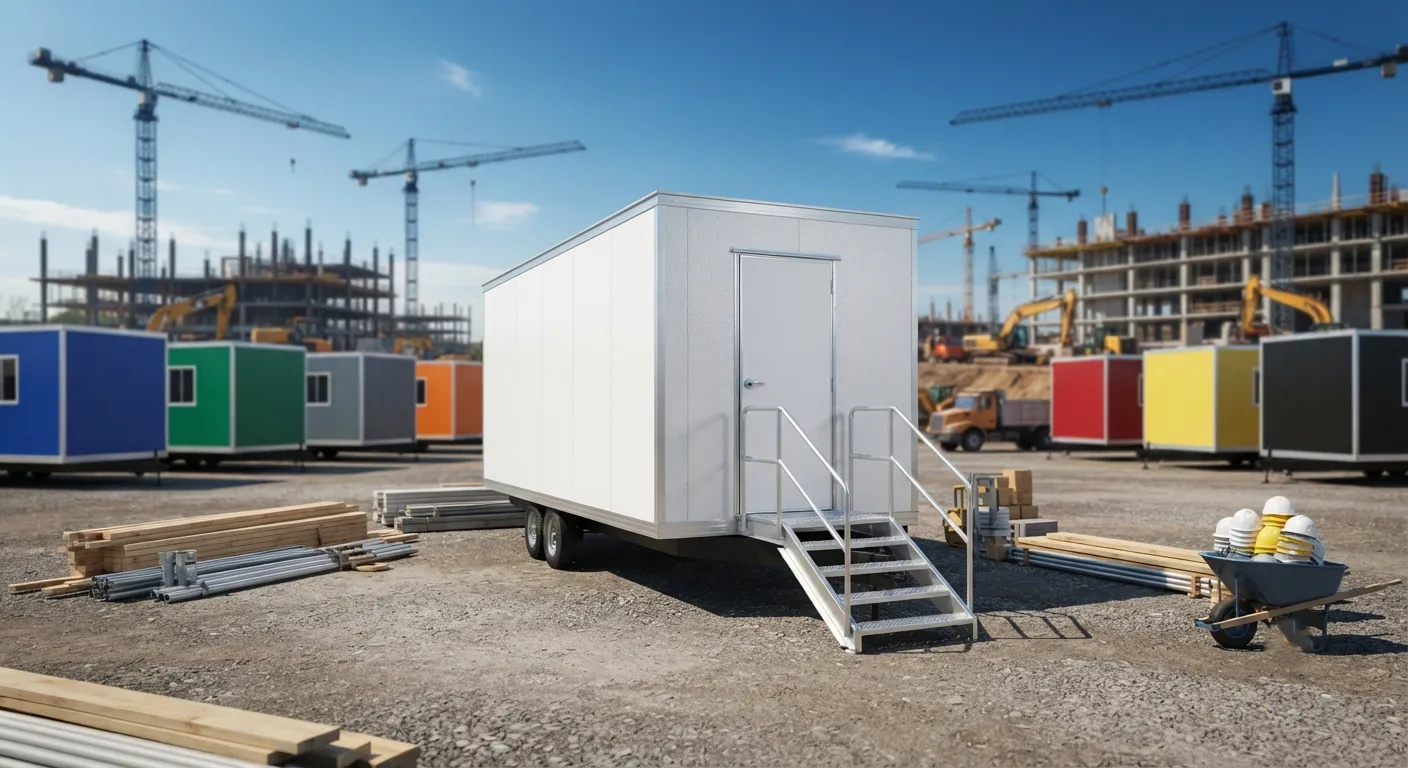
Layout decides whether restrooms feel adequate or overwhelmed, more than raw unit count does. Menifee Porta Pros clusters units at three points: near main gate entry, near the grandstand or main stage, and near food vendor rows, because those three spots pull crowd density all day. Access matters as much as placement. ADA Standards section 405.2 caps ramp slope at 1:12, and section 403.5.1 requires a 36 inch clear path to the unit, so we walk the actual fairground turf before delivery day, not just the site map, since temporary grading and cabling change week to week. Handwashing stations go next to any food service area regardless of whether food handlers touch paint or chemicals, since fair food booths need reliable handwashing on general sanitation grounds; 29 CFR 1910.141(d)(2) requires soap and towels or a hand dryer at wash stations, and hand sanitizer alone does not satisfy it. If a booth is doing any coating or pesticide work on-site, such as painting signage or treating grounds, OSHA 1926.51(f)(1) requires washing facilities for that specific work. We also run temporary fencing around restroom clusters to control queue flow and keep foot traffic organized during peak hours, and pair it with crowd control barrier rental at the busiest walkways. Larger fairs in Menifee often add a restroom trailer near VIP or sponsor areas; an 8 stall restroom trailer handles overflow well when grandstand seating runs deep.
Why does servicing frequency matter more at a fair than a normal event?
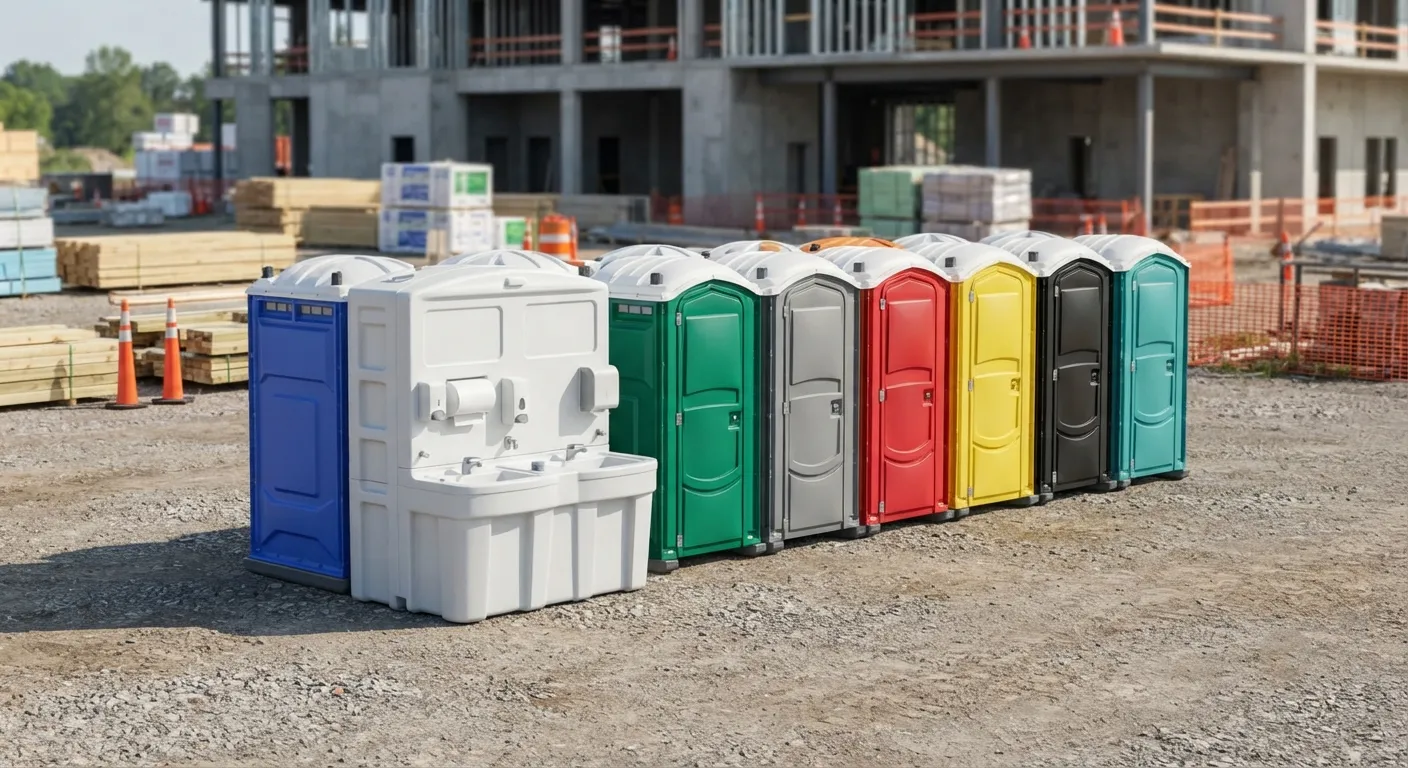
Because a fair runs longer hours over more consecutive days than most one-day events, and tank capacity does the math against you fast. A standard unit carries a 60 to 70 gallon holding tank, and a unit serving a food court all day for four straight fair days needs mid-event servicing, not just a single pre-event drop and a post-event pickup. We schedule service trucks to hit high-traffic clusters mid-run, refill paper, and pump tanks before they reach capacity, which keeps units usable through closing each night. Fairs near Canyon Lake, 5.9 miles west of Menifee, and Lake Elsinore, 11.0 miles west, run on the same service math, since crowd behavior does not change much across the region. We also stage a rapid response option through our emergency porta potty rental line in case a unit takes unexpected damage or a line backs up faster than planned. If the fairground layout changes year to year, our porta potty placement guide and permit requirements page are worth a look before you finalize vendor booth maps, and delivery trucks need roughly 60 feet of straight clearance to drop dumpsters or trailers if the fair also books waste removal equipment for vendor cleanup.
How far ahead should a county fair book restroom service?
Book as early as the layout is set, ideally a couple months out for a multi-day fair, since restroom trailers and large ADA clusters get reserved fast during fair season. Confirm final counts about two weeks before gates open.
Can Menifee Porta Pros handle multi-day fair servicing?
Yes. We schedule mid-run service visits rather than a single drop and pickup, refilling supplies and pumping tanks between peak days so units stay usable through closing each night of the fair.
Do fairgrounds need ADA restrooms even for a one-day event?
Yes. ADA Standards 213.2 requires at least one accessible unit in any cluster, even a small one, and a one-day fair still counts as a public event under that standard.
What about handwashing near food booths?
Every food vendor area needs handwashing stations with soap and towels or a dryer under 29 CFR 1910.141(d)(2). Hand sanitizer stations alone do not meet that standard, though they work well as a supplement near restroom clusters.
Does fairground restroom placement need city approval?
Placement in any public right of way needs confirming with the city of Menifee directly; check our permit requirements guide before finalizing your fairground layout and submit early.
Next step
Get a delivery date
Tell us the address, the dates and the headcount. We size the order and confirm the route.