How Many Restrooms Does a Farm Operation Need?
Start with your headcount, then check the walk distance. OSHA 1928.110 sets the field sanitation bar for agriculture at one facility per 20 hand-labor employees, and it has to sit within a quarter mile of wherever people are working, not just at the barn or the packing shed. That's different from a fixed job site, because crews move field to field, and Menifee Porta Pros often stages two or three standard porta potty rentals at different points on a property rather than one bank near the entrance. If you're running a mixed crew of pickers and equipment operators, OSHA 1926.51(c) still applies to the construction-adjacent tasks like irrigation line work or fence building, which uses a different ratio: one toilet for 20 workers or fewer, climbing to one toilet and one urinal per 40 once you pass that. Potable water has to be on hand too, per OSHA 1926.51(a)(1). Not sure how many units that adds up to for your acreage and crew size? Our how many porta potties do I need guide walks through the math, or you can just call in a headcount and let us size it. Ranches near Canyon Lake, 5.9 miles west of Menifee, and operations out toward Homeland, 8.9 miles northeast, both run this setup during peak season.
What Restroom Options Work Best for Farm Sites?
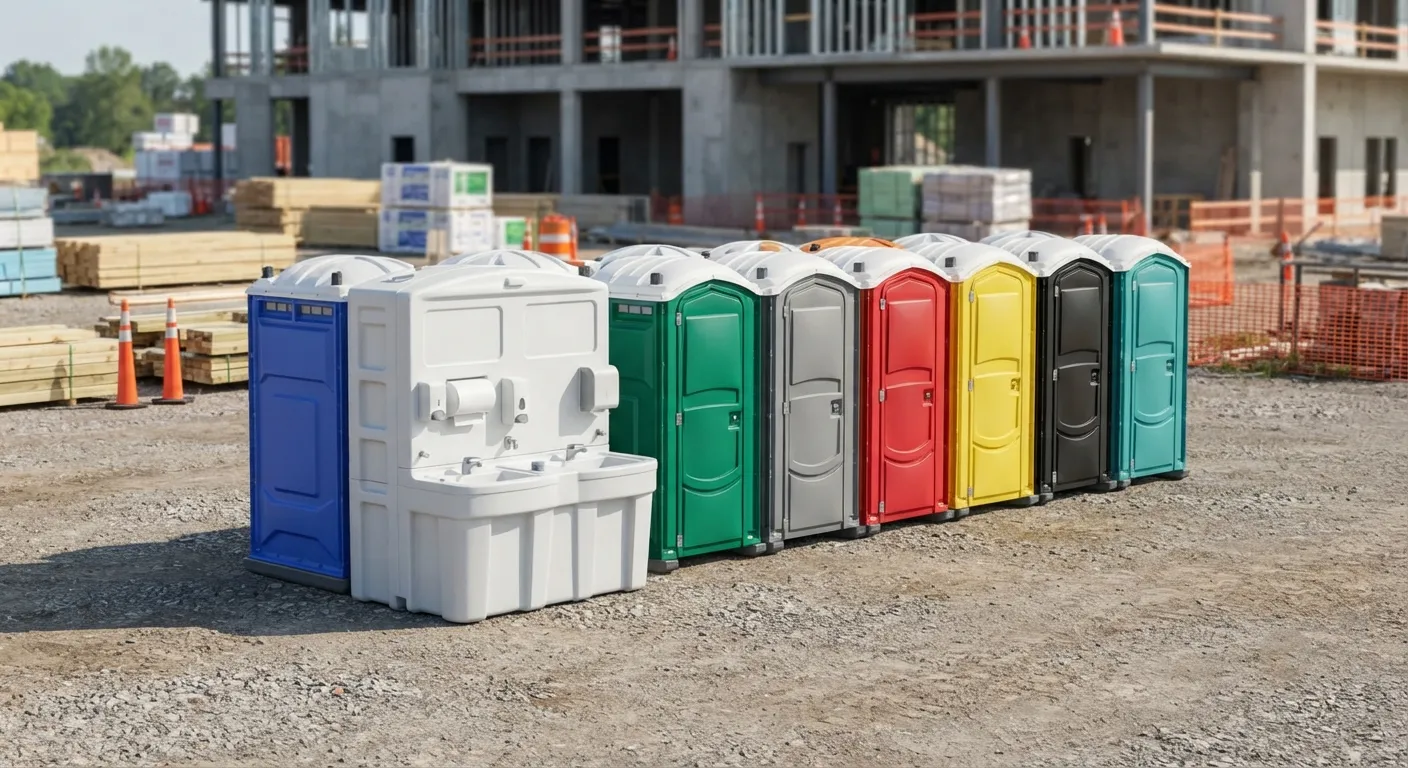
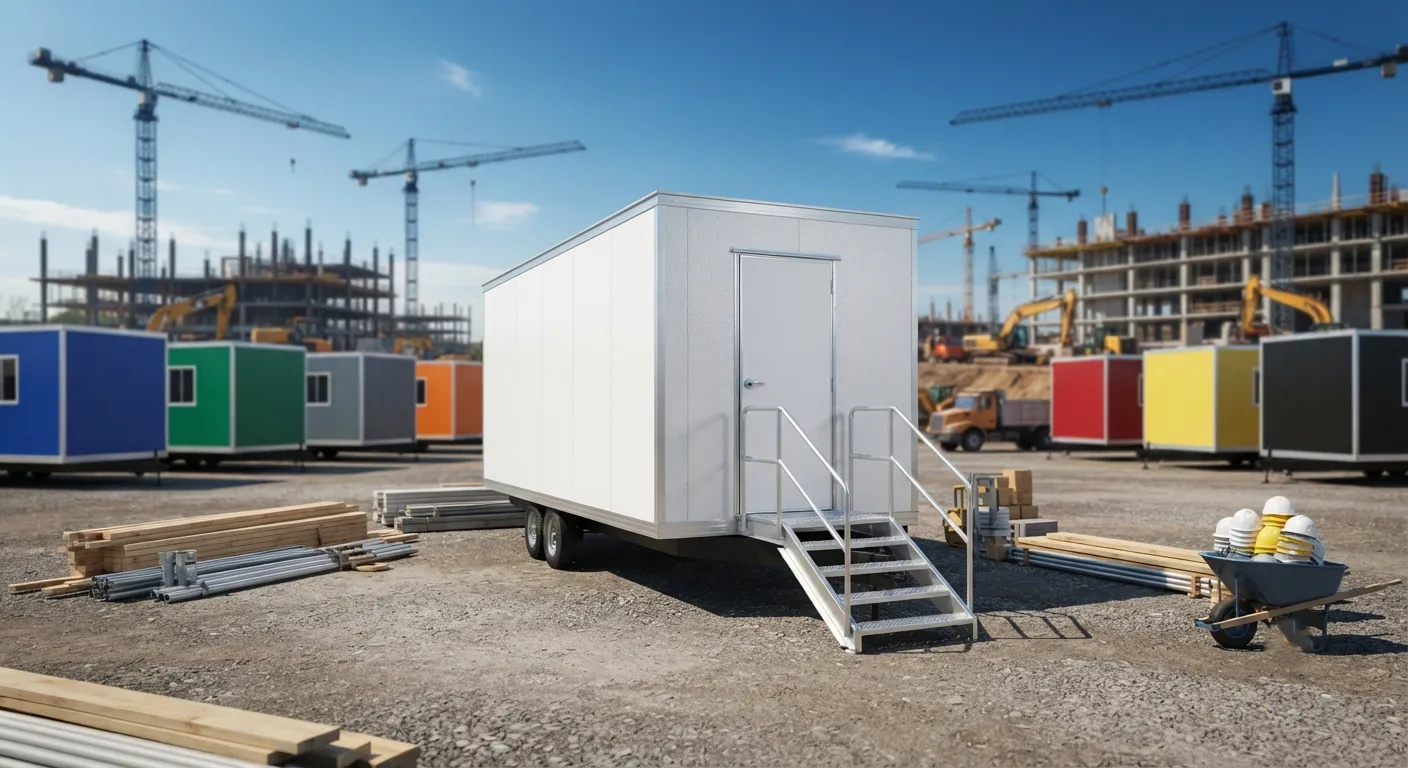
Standard units cover most field work, but wash stations matter more on a farm than on a typical job site. If anyone on the crew is mixing or applying herbicides or insecticides, OSHA 1926.51(f)(1) requires washing facilities for that specific work, and a handwashing station rental or portable sink rental placed near the mixing area covers it. Soap and towels have to be part of that setup, not just sanitizer, per 29 CFR 1910.141(d)(2). For a packing shed or a farm stand with steady foot traffic, a deluxe flushable porta potty holds up better than a standard unit under repeated use. If you've got seasonal workers on site or visitors during harvest events, an ADA accessible porta potty keeps you compliant with ADA Standards 213.2, which requires at least one accessible unit in any cluster, five percent minimum once you scale up. Ranches hosting agritourism, pumpkin patches, or corn mazes should look at event restroom rental or a small restroom trailer rental instead, since those draw a different kind of crowd than a field crew. We also handle temporary fence rental for roped-off visitor paths and light tower rental for early morning or late harvest work when the sun isn't cooperating.
Do Farms Need Septic or Holding Tank Service Too?
Most farm properties in Menifee already have a septic system for the house or main building, and that tank still needs regular attention even with portable units handling the fields. A residential septic tank typically gets pumped every 3 to 5 years depending on tank size and household size, and if you're running a farmhouse kitchen or a commercial kitchen for a farm stand, a grease interceptor needs pumping once fats, oils, grease and solids hit 25 percent of the liquid depth. Our septic pumping service and grease trap pumping cover both. If you're staging a temporary crew bunkhouse or a seasonal labor camp without sewer access, a holding tank rental is often simpler than trying to tie into an existing line. And if something backs up mid-harvest, emergency septic service and emergency porta potty rental are both same-system dispatch, not separate companies. Farms out near Wildomar, 10.2 miles southwest, and Lake Elsinore, 11.0 miles west, use the same setup for seasonal labor housing.
Pricing for Farm and Agricultural Restrooms
| Unit | Day | Week | Month |
|---|---|---|---|
| Standard unit | $100-$350 | $130-$500 | $125-$325 |
| ADA accessible | $200-$400 | $240-$400 | - |
| Deluxe flushable | $85-$1,200 | $150-$290 | - |
Delivery runs $100-$500 for a single day or $50-$150 for a week-long stay, and most farm accounts land on monthly billing since crews are on site for a season, not a weekend. See our porta potty monthly rental page for how that billing works, or check porta potty rental cost for the full breakdown across durations.
How far in advance should I book for harvest season?
Book 2-3 weeks out if possible, since harvest timing across Menifee farms tends to cluster and trucks get booked solid. Rush orders still go out, but you'll have more choice of unit type, tank size, and placement if you call early rather than the week work starts.
Can one unit serve multiple fields on a large property?
Not really, if the fields are spread out. OSHA 1928.110 requires a facility within a quarter mile walk of wherever people are working, so most multi-field operations need two or three units staged at different points rather than one central bank everyone walks to.
Do you service properties without paved road access?
Yes. Farm and ranch delivery is routine work for us, and our trucks handle dirt access roads regularly. Let us know about gates, low branches, or soft ground when you book so we can route the right truck and avoid a stuck delivery mid-season.
What happens if a unit gets knocked over by wind or equipment?
Call us and we'll get it upright or swapped fast, especially during active field work. Units get serviced and reset as part of routine visits too, and our porta potty placement guide covers anchoring and siting to cut down on this in open, windy fields.
Is there a difference between farm sanitation rules and construction site rules?
Yes. Agricultural hand-labor work falls under OSHA 1928.110, with its own ratio and quarter mile walk rule, while construction-type tasks on the same property, like fencing or irrigation builds, fall under OSHA 1926.51(c). Mixed-use properties sometimes need both standards covered at once.
Next step
Get a delivery date
Tell us the address, the dates and the headcount. We size the order and confirm the route.