How Do Porta Potties Work?
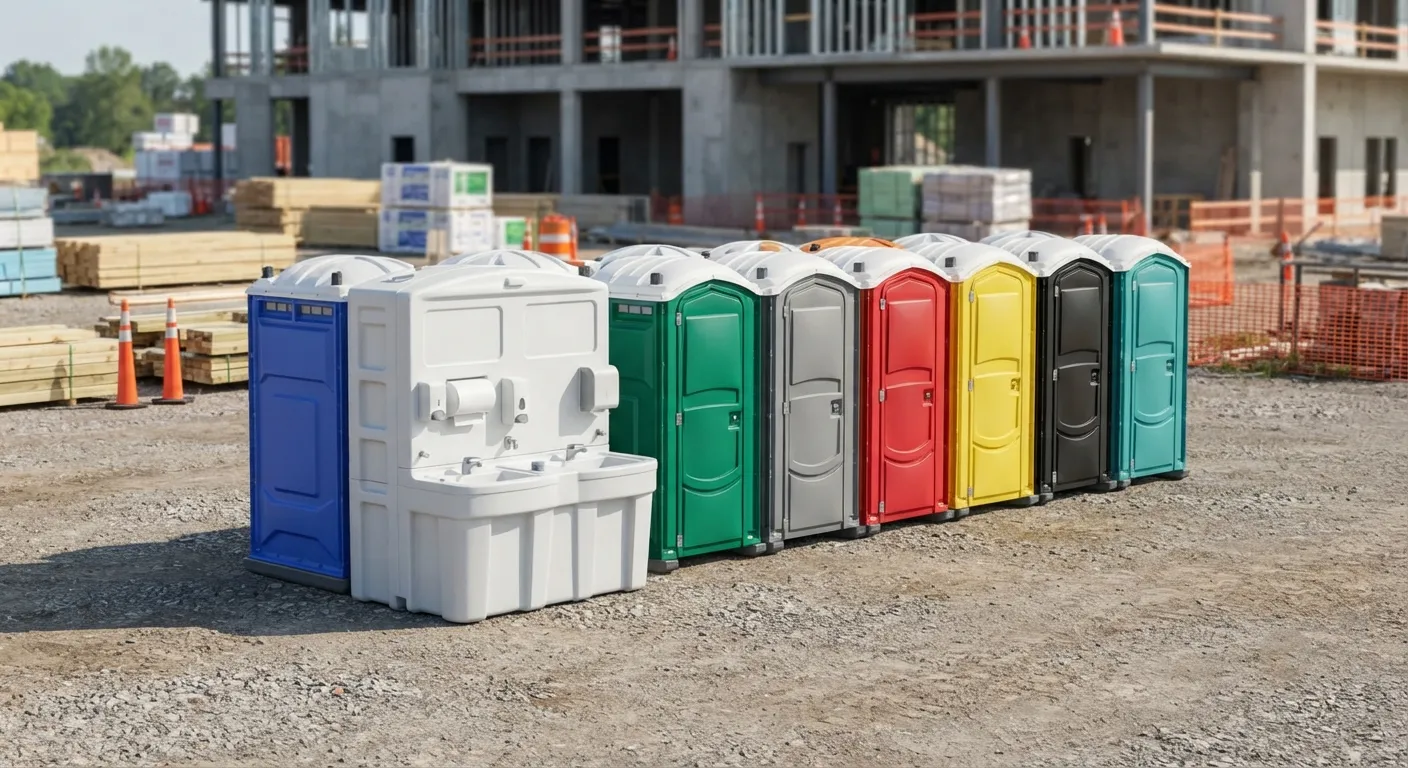
The basic design hasn't changed much in decades. Waste drops into a sealed tank below the seat, and a blue or green deodorizing chemical sits in that tank to knock down odor and start breaking down solids. There's no plumbing, no water line, nothing to hook up. A standard porta potty rental stands about 92 inches tall and measures roughly 44 by 48 inches on the ground, small enough to fit against a fence line or job trailer without eating up space. Ventilation comes from a roof vent that pulls odor up and out rather than back into the stall. When a construction worker steps into a porta potty on a jobsite in Menifee, the routine is the same whether it's a single unit or a bank of ten: door latch, seat, done. Service technicians come back on a set day, pump the tank, wipe down surfaces, and restock the paper. For anyone comparing what a rental actually costs against that service cycle, the porta potty rental cost page breaks down day, week, and month pricing side by side, and the porta potty rental per day page narrows in on short jobs while the monthly porta potty rental page covers longer ones.
How Do Flushable Porta Potties Work?
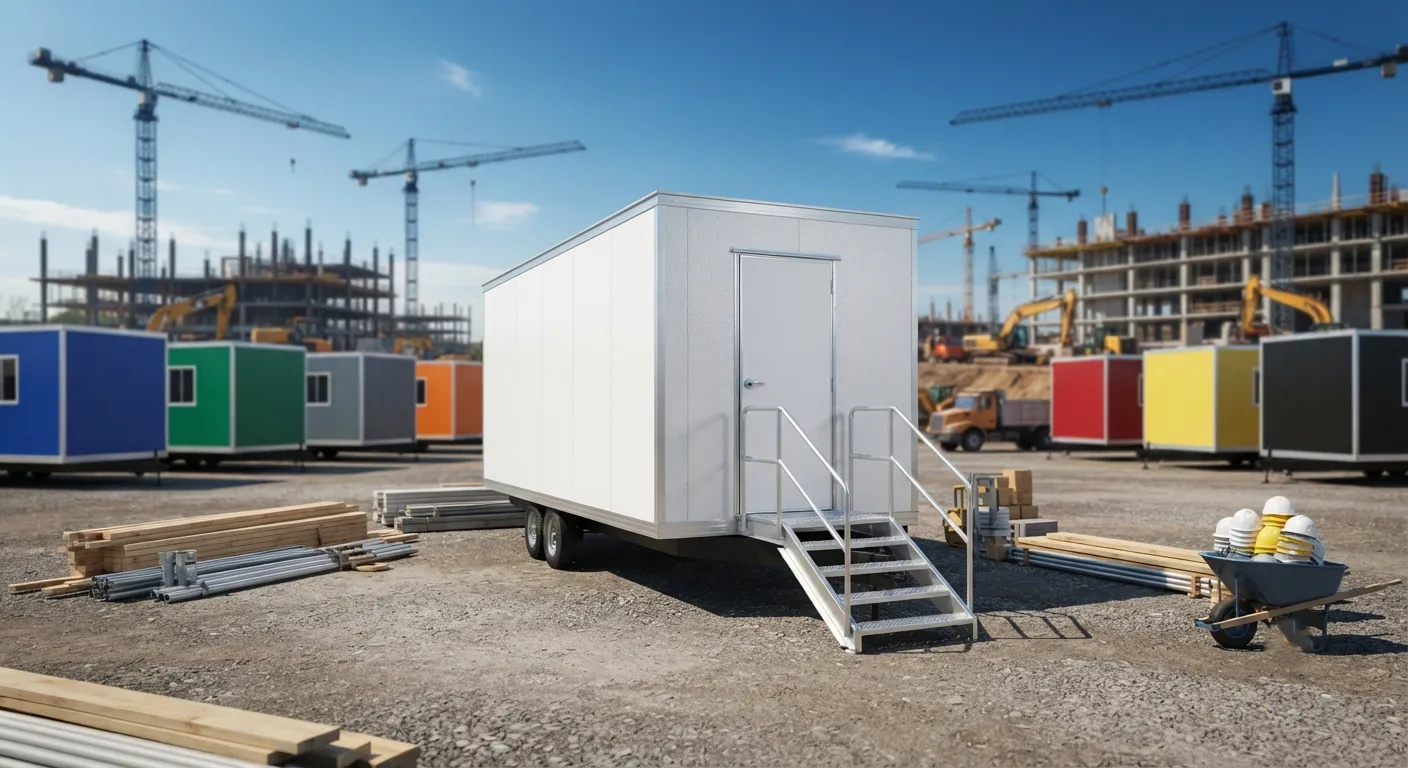
A flushable or deluxe unit adds a small onboard freshwater tank and a foot pump or handle that pushes a rinse of water into the bowl after use, so waste flushes down into the holding tank instead of sitting exposed. It's closer to a home bathroom experience: some deluxe models add a sink, mirror, and interior lighting. The deluxe flushable porta potty line in Menifee runs on the same basic holding-tank principle as a standard unit, just with a flush cycle layered on top. For anyone hosting a wedding, a corporate event, or a long weekend project where guests expect more than a bare-bones unit, that flush mechanism matters. Larger jobs sometimes skip individual flushable units entirely and go straight to a restroom trailer rental, which runs multiple flushing stalls off a shared freshwater and holding system, similar in concept but built at trailer scale with separate stalls for men and women, whether that's a compact 2 stall restroom trailer or a larger 4 stall restroom trailer for bigger crews and guest counts.
How Does a Portable Sink Work?
A portable sink runs on the same no-hookup logic as a porta potty: a fresh water reservoir feeds the tap, usually through a foot pump or a small onboard pump, and a separate gray water tank underneath catches the runoff. Under 29 CFR 1910.141(d)(2), washing facilities have to include soap and a way to dry hands, since hand sanitizer alone doesn't satisfy that requirement. That's why a handwashing station rental or portable sink rental gets paired with porta potties on most job sites rather than swapped in as a substitute. OSHA 1926.51(f)(1) requires washing facilities specifically where crews are applying paints, coatings, herbicides, or insecticides, so a landscaping crew or a paint contractor working around Menifee needs that sink on site, not just a hand sanitizer station rental. For jobs where handwashing needs are less clear-cut, the handwashing requirements page walks through what actually triggers the obligation.
How Do Camping Porta Potties Work?
Camping and event units work off the identical holding-tank-and-chemical setup as a jobsite unit, just deployed for a shorter stretch and often in a more remote spot. A weekend rental for a campground or backyard gathering near Canyon Lake, 5.9 miles west of Menifee, or out toward Lake Elsinore, 11.0 miles west, still needs the same 60-plus gallon tank capacity and the same servicing cadence to stay usable for a two or three day stretch. The camping porta potty option and the event restroom rental line both draw from the same fleet as construction-grade units, just cleaned and delivered fresh for the occasion, and the same logic applies to a wedding restroom rental or a festival restroom rental booked out near San Jacinto, 17.6 miles northeast. Delivery access matters here too. Roll-off and larger trailer deliveries need about 60 feet of straight clearance behind the truck, so a tight campsite road or narrow gate in Menifee is worth mentioning before delivery day, not after the truck is already stuck, and the same clearance rule applies whether it's a roll-off dumpster rental or a storage container rental headed to the same site. The porta potty placement guide covers clearance and ground surface before you book.
| unit | day | week | month |
|---|---|---|---|
| standard | $100-$350 | $130-$500 | $125-$325 |
| deluxe | $85-$1200 | $150-$290 | - |
| ada | $200-$400 | $240-$400 | - |
How often does a porta potty get pumped?
Most jobsite units run on a weekly pump-and-clean cycle under the ANSI/PSAI Z4.3 baseline, which covers up to 10 users over a 40 hour week. Heavier-use sites, like a busy construction site services job or a multi-day event, often need twice-weekly service instead. The how often are porta potties cleaned page has the full breakdown.
Do porta potty chemicals near me pose any health risk?
The blue or green deodorizing chemical is formulated for enclosed sanitation tanks and is handled by trained service techs during pumping, not something a renter ever needs to touch. It controls odor and slows bacterial breakdown between service visits. Menifee Porta Pros handles all chemical refill and tank pumping as part of standard service, including rush situations covered under emergency porta potty rental.
How many porta potties does a construction site need?
OSHA 1926.51(c) sets the ratio: one toilet for 20 workers or fewer, then one toilet and one urinal per 40 workers as the crew grows past that. The how many porta potties do I need guide walks through counts for larger crews and multi-week jobs.
Are porta potties ADA accessible?
Accessible units exist and follow specific dimensions: ADA Standards 404.2.3 sets a 32 inch minimum door width, and 304.3.1 requires a 60 inch turning circle inside. Where units are clustered, ADA 213.2 requires at least 5 percent to be accessible. See the ADA accessible porta potty page for specs.
What is the difference between a porta potty and a septic tank?
A porta potty is a sealed, self-contained tank that gets pumped on a schedule and hauled off-site. A septic tank is a permanent underground system tied to a building's plumbing, typically pumped every 3 to 5 years depending on tank and household size. Menifee Porta Pros handles both through septic pumping service.
Next step
Get a delivery date
Tell us the address, the dates and the headcount. We size the order and confirm the route.