
How Many Porta Potties Do I Need Under OSHA?
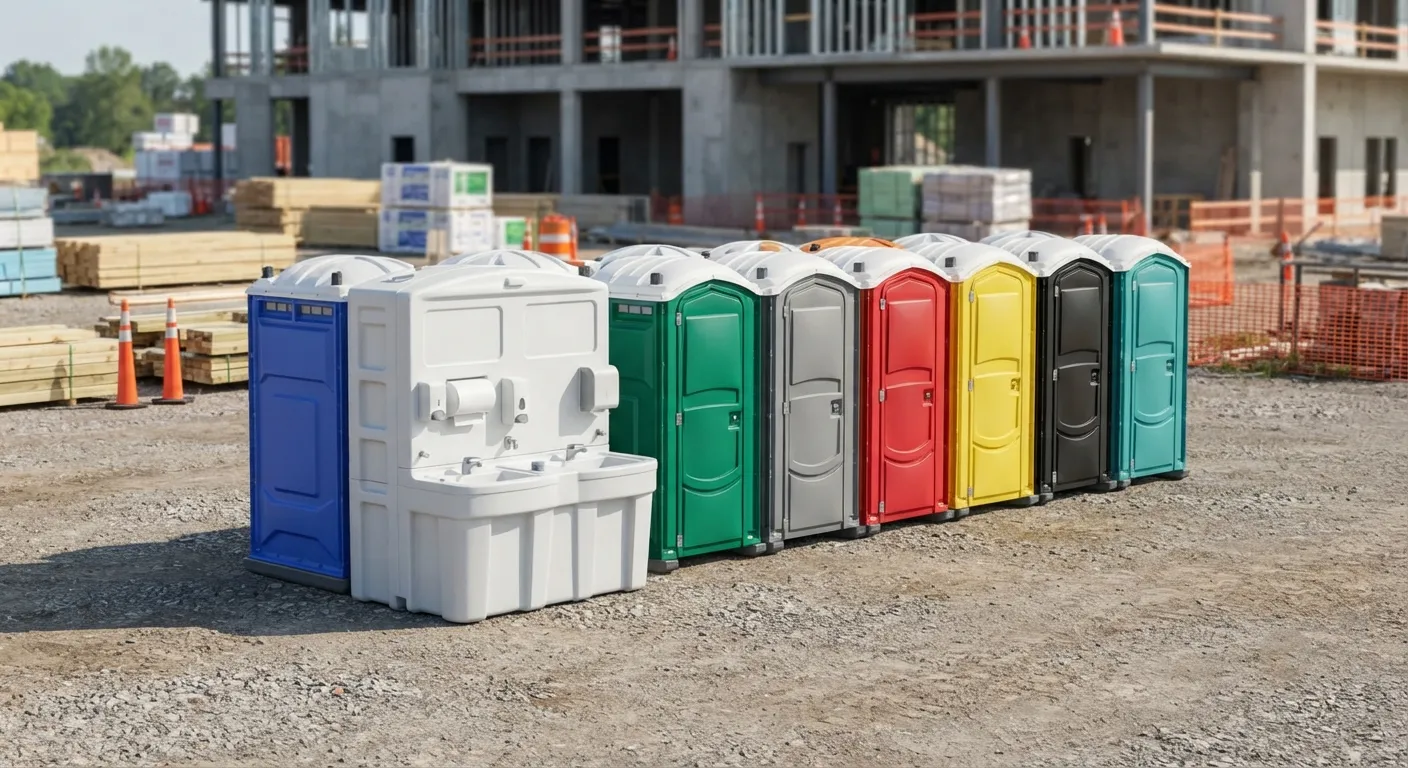
The ratio in 1926.51(c)(1) is the starting point: 1 toilet seat for 20 workers or fewer, then 1 seat and 1 urinal per 40 workers as the crew grows past 20, and 1 seat and 1 urinal per 50 once you hit 200 or more. That table assumes a standard 8 to 10 hour shift, not a stacked schedule with three crews rotating through. A lot of Menifee contractors round up anyway, because a line at the unit during a break costs more in lost minutes than the rental does. If you are still not sure where your crew lands, our guide on how many porta potties you need walks through the math with real examples. General industry sites, warehouses and offices instead of active construction, fall under 1910.141(c)(1)(i), a separate ratio table. Most of our Menifee customers are building, not staffing an office, so 1926.51(c)(1) is the one that applies.
Does OSHA Have a Portable Toilet Distance Requirement?
OSHA does not publish a fixed foot count for how far a toilet can sit from the work area on a general construction site. What it does specify, in 1928.110, is agricultural field sanitation: a facility within a quarter mile walk, one per 20 workers. Construction sites do not carry that same walking-distance number under 1926.51(c)(1), so placement comes down to practical judgment: close enough that workers actually use it, clear of trenches and traffic, and reachable without cutting through an active work zone. Our porta potty placement guide covers footing, clearance and where not to set a unit on sloped or unstable ground, which ADA Standards 302.1 also touches on for accessible routes. If you are running a farm crew instead of a build site, the farm and agricultural restrooms page is the one to read, since 1928.110 governs there instead.
Does Cal/OSHA Have Different Portable Toilet Requirements Than Federal OSHA?
Cal/OSHA administers its own state plan, and California contractors should confirm current state-specific toilet ratios and posting requirements directly with Cal/OSHA rather than assume the federal table is a perfect match. What we can confirm from the federal side: 1926.51(c)(1) sets the baseline seat-to-worker ratio for construction, and 1926.51(a)(1) separately requires an adequate supply of potable water at every place of employment. Neither of those changes because a job sits in Menifee instead of somewhere else, but state-level enforcement details and any added posting rules are outside what we can verify here, so check with Cal/OSHA before you finalize a plan for a large or long-duration job. Renting from construction site services in Menifee means the unit count gets set to the federal ratio at minimum, and adjusted up from there based on crew size and shift overlap.
What Sanitation Rules Apply Beyond Just Toilet Count?
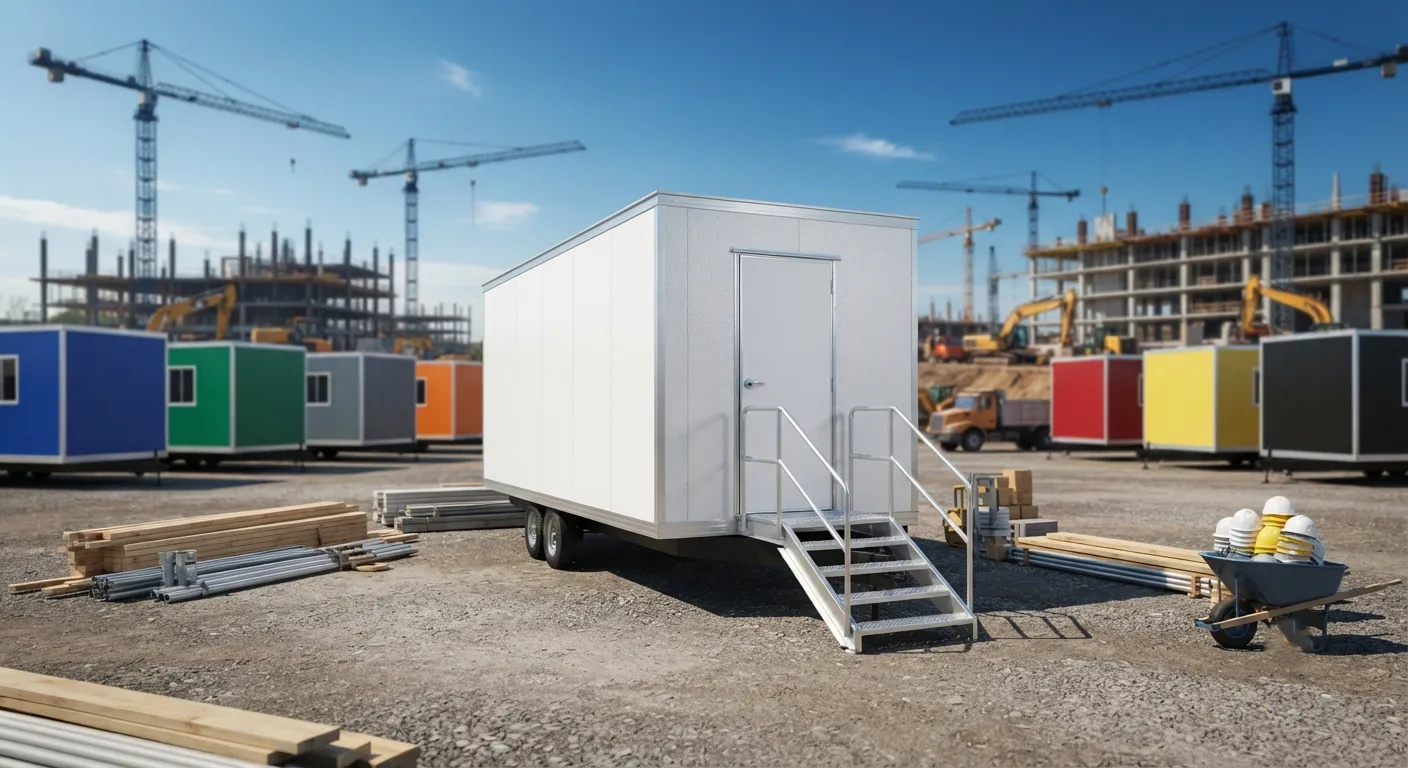
Toilet count is only part of it. 29 CFR 1910.141(d)(2) requires washing facilities stocked with soap and towels or a hand-drying device, and hand sanitizer alone does not satisfy that rule. If your crew is applying paints, coatings, herbicides or insecticides, 1926.51(f)(1) kicks in separately and requires washing facilities for that contaminant exposure specifically, distinct from general handwashing. A handwashing station rental or portable sink rental covers both needs without you having to guess which standard applies. Lighting also matters on active sites: 1926.56(a) sets minimum illumination levels by area type, which is why night crews often add a light tower rental alongside sanitation units. Housekeeping under 1926.25 requires debris cleared from work areas, and if you're running a dumpster for that, our construction dumpster rental page has sizing details. For jobs needing accessible units, ADA Standards 213.2 requires at least 5 percent of clustered single-user units be accessible, never fewer than one; see our ADA accessible porta potty page for specs like the 32 inch door opening under ADA 404.2.3.
Menifee sites near Canyon Lake, about 5.9 miles west, and Wildomar, 10.2 miles southwest, follow the same federal ratios; nothing about crossing a city line changes the OSHA table. If your project spans multiple Menifee addresses, our service areas page lists coverage including Lake Elsinore, 11.0 miles west, and Homeland, 8.9 miles northeast. For pricing once you've settled on a count, see porta potty rental cost or porta potty rental per day, and for jobs running months instead of weeks, monthly porta potty rental usually pencils out cheaper per day than short-term rates.
How many porta potties does OSHA require for 20 workers?
One toilet seat covers a crew of 20 or fewer under 1926.51(c)(1). Once you cross 20 workers, the rule adds a second seat plus a urinal, scaled per 40 workers from there. Most Menifee contractors add a second unit early anyway to cut break-line delays.
Do portable toilets need to be ADA accessible on a job site?
Not every unit, but a percentage does once you're clustering multiple units. ADA Standards 213.2 requires at least 5 percent of a cluster be accessible, with a minimum of one unit regardless of total count. Check our ADA accessible porta potty page for the unit specs.
Is hand sanitizer enough to meet OSHA handwashing rules?
No. 29 CFR 1910.141(d)(2) specifically requires soap and towels or a hand-drying device at washing facilities. Hand sanitizer does not satisfy that standard on its own. A handwashing station rental covers the requirement properly.
What OSHA rule covers toilets for office or warehouse workers instead of construction?
General industry workplaces fall under 1910.141(c)(1)(i), a separate ratio table from construction's 1926.51(c)(1). If your Menifee site is a mix of office trailer and active build, both standards may apply depending on which workers use which facilities.
Does placement distance from the work area matter for OSHA compliance?
Federal construction rules under 1926.51(c)(1) do not set a fixed foot distance, unlike agricultural field sanitation under 1928.110, which specifies a quarter mile walk. Placement still needs to be practical: reachable, clear of hazards, and not blocking an active work zone. See our porta potty placement guide for specifics.
Next step
Get a delivery date
Tell us the address, the dates and the headcount. We size the order and confirm the route.