
How Often Does a Septic Tank Need Cleaning?
There's no single number that fits every house. A typical residential septic tank gets pumped every 3 to 5 years, and that window moves based on tank size and how many people live in the house. A bigger household with a smaller tank pushes toward the 3 year end. A couple in a home with a large tank might stretch closer to 5. If you're not sure which side you're on, septic tank cleaning service can include an inspection that tells you where your tank actually sits. Menifee's mix of older ranch homes and newer developments means tank sizes vary a lot block to block, so don't assume your neighbor's schedule matches yours, and if you're weighing options check the porta potty rental cost page for context on what temporary sanitation runs while you sort out the tank. When pumping day arrives, septic pumping service in Menifee runs in the same price band as a service call, and knowing that range ahead of time helps you plan the year. If you want the specific numbers before you call, check septic tank pumping cost for what a typical visit runs.
What Happens If You Wait Too Long?
Waiting past your pump-out window lets solids build up until they clog the drain field, and that repair costs far more than a pump-out ever would. Watch for slow drains, gurgling pipes, standing water near the tank, or a sewage smell in the yard. Those are the signs covered on septic tank warning signs, and none of them should be ignored for long, the same way a crew watches dumpster weight limits so a debris box doesn't become its own emergency. If your system backs up entirely, emergency septic service is built for exactly that situation, and it costs less to call early than to call after the yard's flooded. Homeowners in Menifee sometimes wait because pumping feels optional. It isn't. A tank that's never pumped will eventually fail its drain field, and drain field replacement is a different scale of cost than routine maintenance, roughly the same lesson property managers learn from dumpster permit requirements before a big cleanout. If your property runs a grease interceptor for a home business or rental kitchen, that's a separate schedule: interceptors get pumped once fats, oils, grease and solids reach 25 percent of the liquid depth, which grease trap pumping covers in more detail.
Do Household Size and Tank Size Both Matter?
Yes, and they interact. A 1,000 gallon tank serving two people lasts longer between pumps than the same tank serving six. Water use matters too: laundry frequency, garbage disposal use, and how many bathrooms stay in regular use all shift the math. Homes near Canyon Lake, 5.9 miles west of central Menifee, and Wildomar, 10.2 miles southwest, often deal with similar soil conditions, so pump schedules there tend to track close to what we see in Menifee proper. If your household has grown since you last had the tank checked, that alone can shorten the interval. Renovation projects add pressure too, and a storage container rental on site can keep tools and fixtures out of the way while the work happens. A remodel that adds a bathroom or a rental unit changes the load on a system sized for the old floor plan. If you're mid-renovation and need restroom coverage while plumbing is offline, home renovation porta potty rental keeps the household running without leaning on a stressed system. For construction crews working near a septic line, construction site services can coordinate portable facilities so nothing gets routed into a tank that's already due, and a temporary fence rental keeps foot traffic away from the tank access point while work is underway.
When Should You Schedule the Next Pump-Out?
Schedule based on your last pump date plus your household's position in the 3 to 5 year range, not on a fixed calendar reminder that ignores your actual usage. If you don't have records of the last pump, treat that as a sign to get one now rather than guess, the way you'd check how many porta potties do i need before an event instead of assuming last year's count still works. Homeowners in Homeland, 8.9 miles northeast of Menifee, and Lake Elsinore, 11.0 miles west, face the same regional soil and groundwater conditions, so if pumping has been an issue for neighbors in those areas, it's worth checking your own tank sooner. If you're building a schedule around an event, a temporary use, or an added structure, how often to pump a septic tank planning should happen before the system gets extra load, not after, much like booking event restroom rental or a handwashing station rental ahead of the date rather than the week of. For properties that need a backup while the tank's being serviced, holding tank rental covers the gap, and a portable sink rental can fill in for handwashing during the same window. If you manage a property in San Jacinto, 17.6 miles northeast, the same 3 to 5 year guidance applies, and porta potty rental in San Jacinto is available if you need temporary restrooms during service, the same way porta potty rental in Wildomar and porta potty rental in Lake Elsinore cover those neighboring towns, and our service areas page lists everywhere else we reach.
How do I know if my septic tank is full?
Slow drains, gurgling toilets, standing water over the tank, or a sewage odor near the drain field all point to a full tank. Don't wait for a backup. Call for an inspection as soon as you notice any of these signs, especially if it's been more than 3 years since the last pump.
Can I pump my own septic tank?
No. Pumping requires specialized equipment to remove solids safely and dispose of them properly. DIY attempts risk damaging the tank, contaminating groundwater, or exposing you to raw sewage. Hire a licensed service for every pump-out.
Does household size really change the pumping schedule?
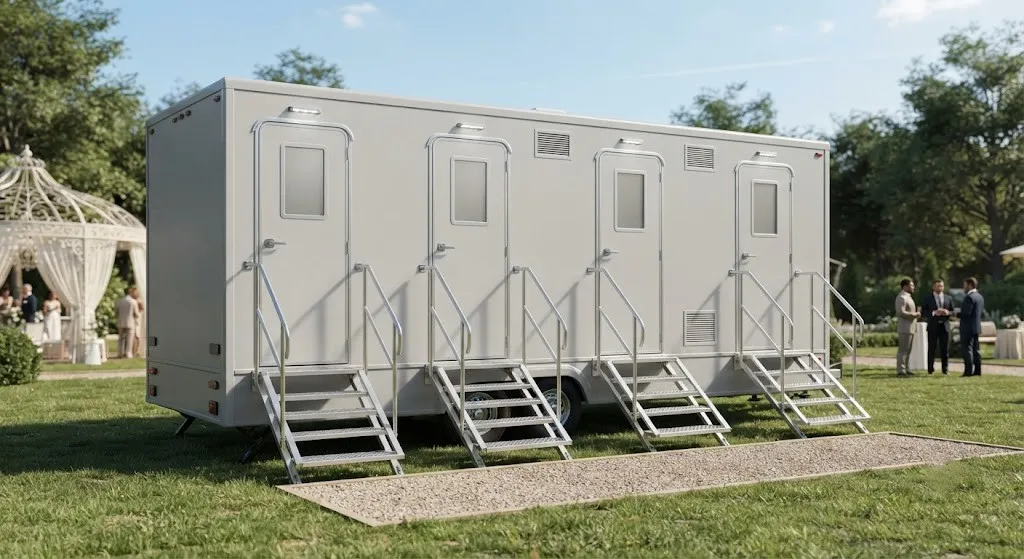
Yes. More people means more water and more solids entering the tank daily. A six-person household will typically need pumping closer to every 3 years, while a two-person household with the same tank size might stretch toward 5 years before it's necessary, similar to how a 4 stall restroom trailer handles more daily use than a 2 stall restroom trailer on the same job site.
What size is a typical septic tank?
Many residential systems use a 1,000 gallon tank, though size varies by home age and household size. Tank size is one of the two main factors, along with household size, that determines how often pumping is needed.
Is a grease trap the same as a septic tank?
No. A grease interceptor is a separate system for kitchen wastewater, pumped once fats, oils, grease and solids hit 25 percent of the liquid depth. Septic tanks handle general household wastewater on a 3 to 5 year cycle instead.
Next step
Get a delivery date
Tell us the address, the dates and the headcount. We size the order and confirm the route.